
THE IDENTITY AND CONTINUITY LAYER
FOR AUTONOMOUS SYSTEMS
It provides deterministic identity, lifecycle continuity, and governance enforcement for agents operating across distributed environments.

It provides deterministic identity, lifecycle continuity, and governance enforcement for agents operating across distributed environments.

ACELOGIC™ establishes canonical identity for every autonomous agent.

structured across identity, governance, and execution layer

singular, non-forkable identities enforced by the control plane
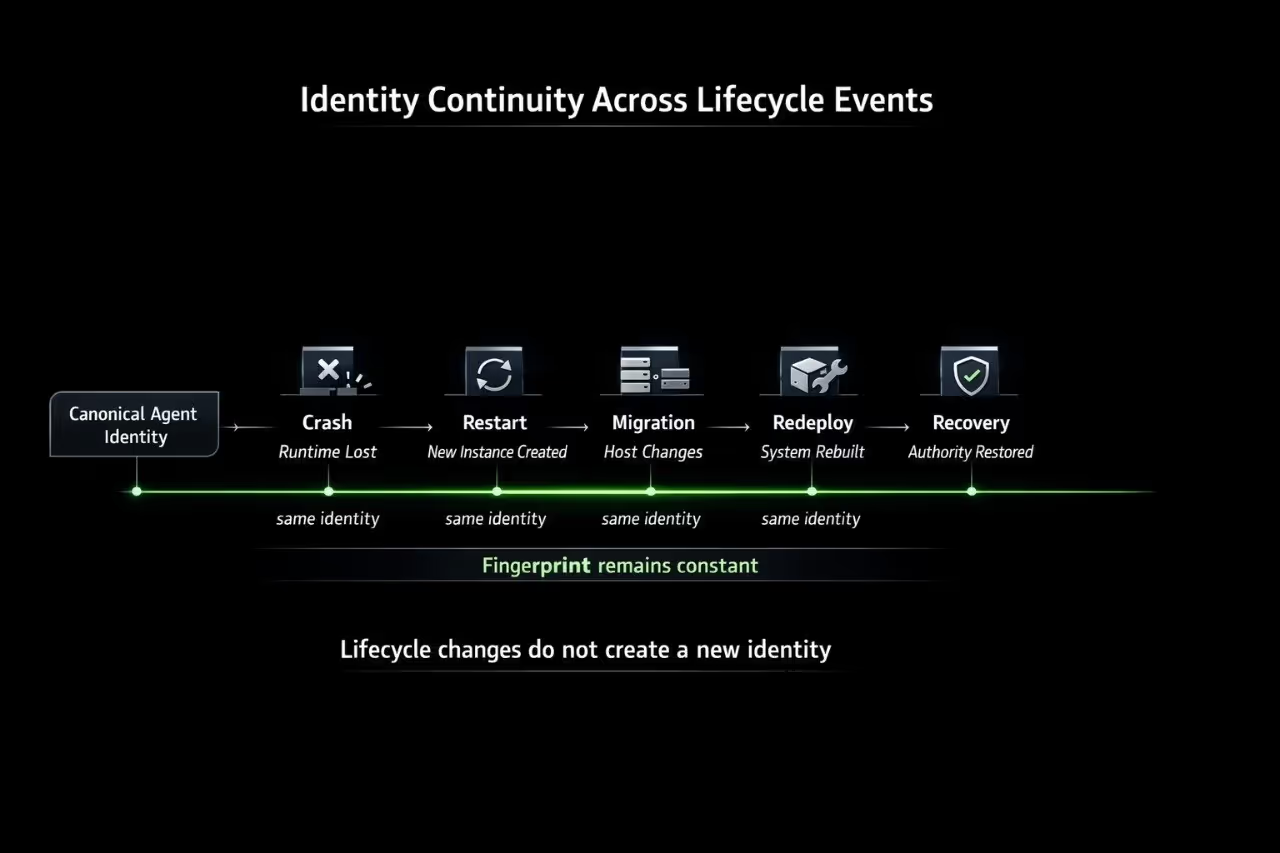
○ has a one-of-one canonical deterministic identity
○ persists across restarts, migrations, and environments
○ cannot be duplicated, forked, or impersonated
○ maintains verifiable canonical lineage over time
.avif)
○ Multiple instances can claim the same authority
○ Execution becomes ambiguous
○ Accountability is lost

.avif)
ACELOGIC™ enforces deterministic identity and continuity at the infrastructure level.
ACELOGIC™ operates as a control-plane layer beneath applications and runtimes.
While CONTINUITY NOTARY™ is independently licensable, it is actively implemented within NXQ’s broader architecture


ACELOGIC™ defines a new class of autonomous systems:

Agents structured across identity, governance, and execution layers.
Dimensional Agents are not flat processes, they are structured, enforceable systems.
○ One identity
○ One lineage
○ One authority path



Agents are created as Dimensional Agents through a controlled identity issuance process.
Each agent is instantiated as a canonical identity within ACELOGIC™.
○ a deterministic identity fingerprint
○ a unique agent ID
○ a bound mission and scope
○ an initial continuity state

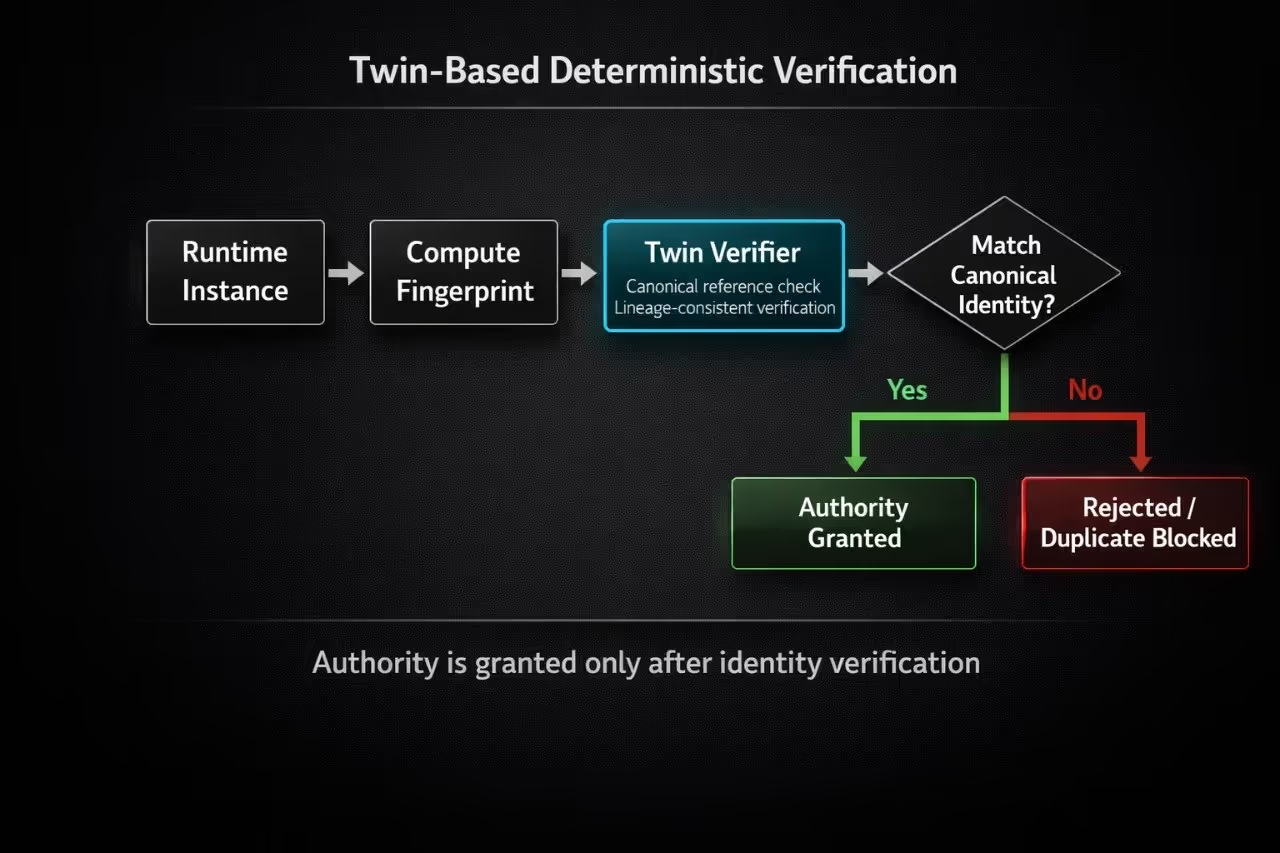
○ Only the canonical identity is permitted to continue execution.
○ Execution authority is granted only to the canonical identity.

Identity is bound to the agent, not the runtime.
○ Identity is not session-based
○ Identity is not environment-dependent
○ Identity persists across all deployments

○ Duplicate agents are detected
○ Unauthorized forks are rejected
○ Cloned identities are quarantined
○ Split-brain execution is prevented

○ Agents become canonical infrastructure-bound entities
○ Agents operate as Dimensional Agents with enforced structure and scope
○ Execution becomes attributable
○ Systems become auditable
○ Autonomy becomes governable

ACEPLACE™ cannot execute without ACELOGIC™ identity enforcement.
○ ACELOGIC ensures who the agent is
○ ACEPLACE ensures what the agent does
○ Defined authority boundaries
○ Jurisdiction constraints
○ Mission scope limitations
○ Regulatory compliance
○ Auditability
○ Controlled execution environments

○ Deterministic authority routing
○ Identity-aware coordination
○ Verifiable execution paths

ACELOGIC™ operates strictly on identity and continuity, not content or computation.

○ Public cloud (AWS, Azure, GCP)
○ Private and sovereign infrastructure
○ Eedge environments
○ Physical autonomous systems
Identity remains consistent regardless of execution environment.

Evaluation access for testing and exploration
○ Access via ACELOGIC.AI
○ Managed identity infrastructure
○ No deployment required
○ Deployed within customer systems
○ Full identity control
○ Sovereign and regulated environments supported






Without identity, agents are ephemeral processes.
Without continuity, identity cannot be proven.
.avif)
.avif)